Seapost -> The Bombay - Aden Sea Post Office Service
The Bombay - Aden Sea Post Office Service
By Mike Dovey & Peter Bottrill
The Bombay - Aden - Suez Sea Post Office service was introduced in 1868 to speed the delivery of mails to and from India. It was operated by the Peninsular & Oriental Steam Navigation Company on their steamer service from Suez to Bombay, via Aden. The sorting of the mails in either direction was carried by up to six teams under the control of the Indian Post Office. An intermediate stop was made at Aden for the discharge and collection of mails to and from East Africa and the Arabian coast, as well as for refuelling the ships.
This service was based on a similar service operated by the British Post Office on the P. & O. ships operating between Alexandria in Egypt and Marseilles, France, and return. This service, known as the Mediterranean Sorters, was terminated on the 28th May, 1870, but the Bombay service continued to operate up to the start of the First World War in August 1914.
The first contract between the Indian Post Office and the P. & O. Company was raised in 1867 and the first sailing to carry mail to India was in May 1868. There were several updates to the contract during the following decades of operation.
There are 12 different types of transit marks used on this service, with a further five distinct categories used to cancel mail posted on the steamers, some of these are shown in this article. See references for further details, including Paquebot marks, Overland marks, Miss-sent and Re-Directed mail, and Registered mail.
The 12 basic types of mark are:


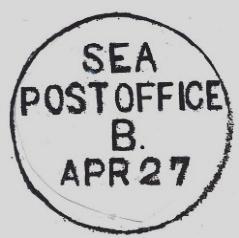
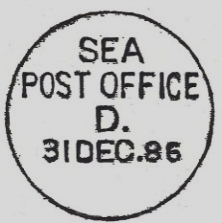

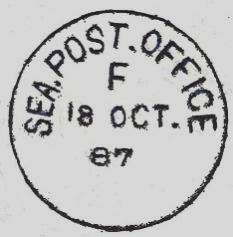
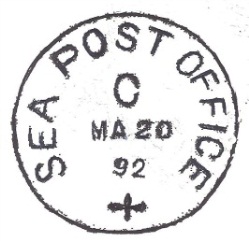
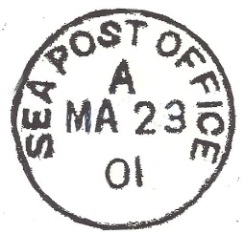
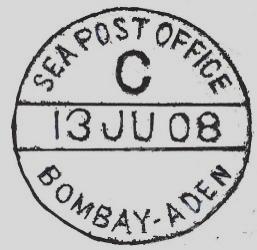
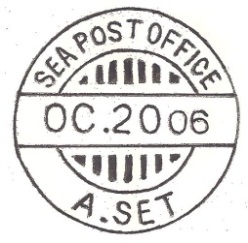
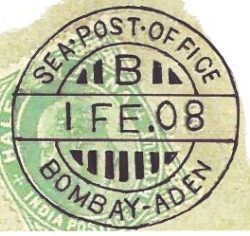

In the beginning of the contract there were six "Sets" of post office sorting teams and each one was given a letter from A to F, later this was changed and while the number of teams stayed the same the letters were cut down to A - C resulting in a great number of variations.
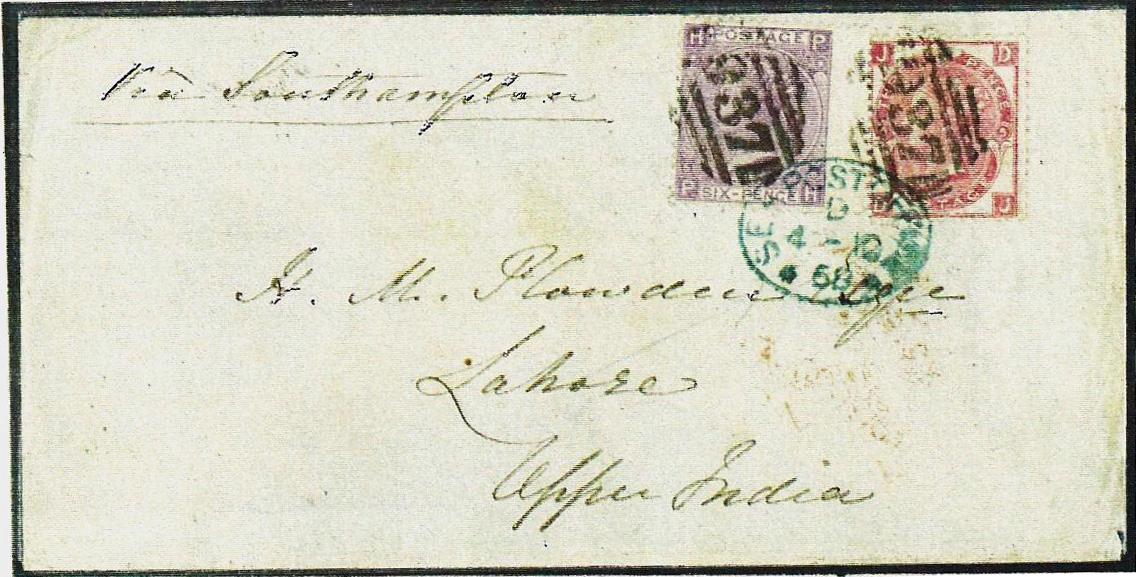
Mark Type 1: Dated 4th October 1868, in green, and carried on board the Sumatra
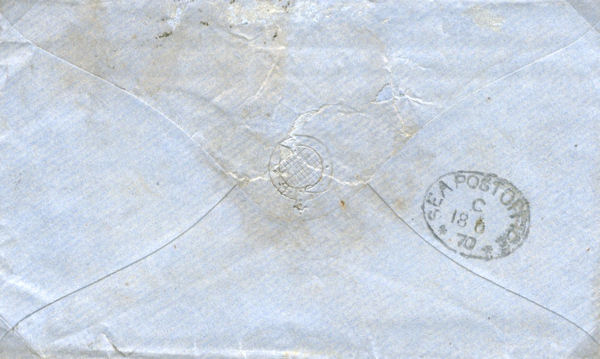
Carried on the S.S. Salsette. Route: Departed Suez 18-6-1870, Aden 24-6-1870, and arrived Bombay 1-7-1870.
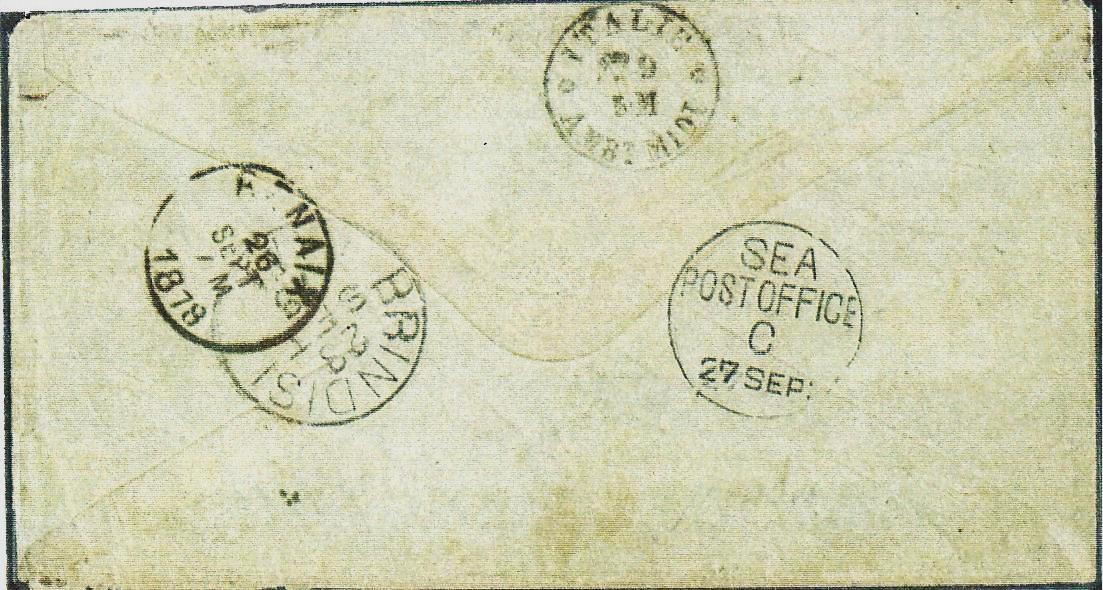
Letter posted from Calcutta to Renaix by the Nepaul. It should have been dated 6.9.1878 but was marked with the date for the return voyage back to India. This is the earliest known use of C Set.
Note the Italian travelling post office Ambulante mark 'ITALIE / AMBT. MIDT' .
Mail that was miss-sorted had a 'MALDIRIGE' mark applied as well as the SPO transit mark.
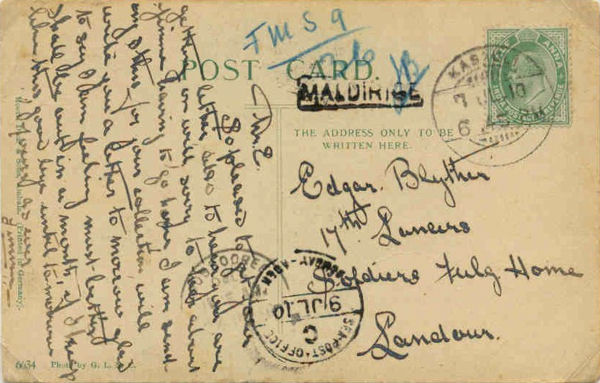
Post Card sent to Landour, India but miss-sorted to London. Error of sorting note by SPO sorters and returned to India from Aden.
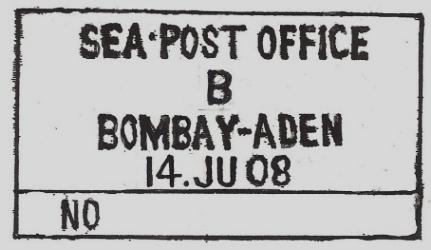
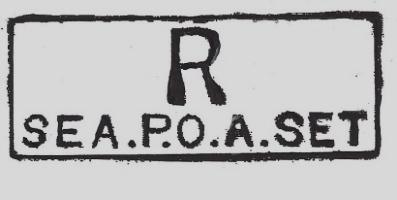
Although special cancellers should have been used to cancel mail posted on board the steamers, many examples exist where mail has been cancelled using the transit marks shown above. Below are some of the specific cancellers that were issued to cancel mail.


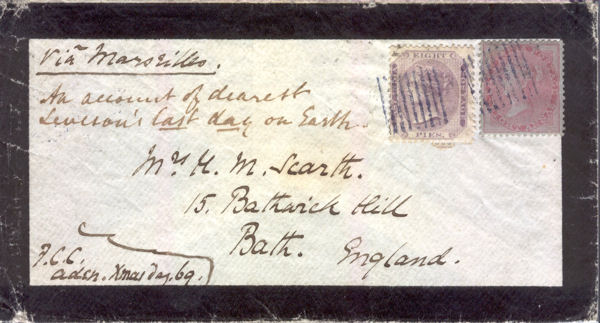
Earliest recorded example of mail posted on board steamer with
the 'diamond of bars' mail canceller.
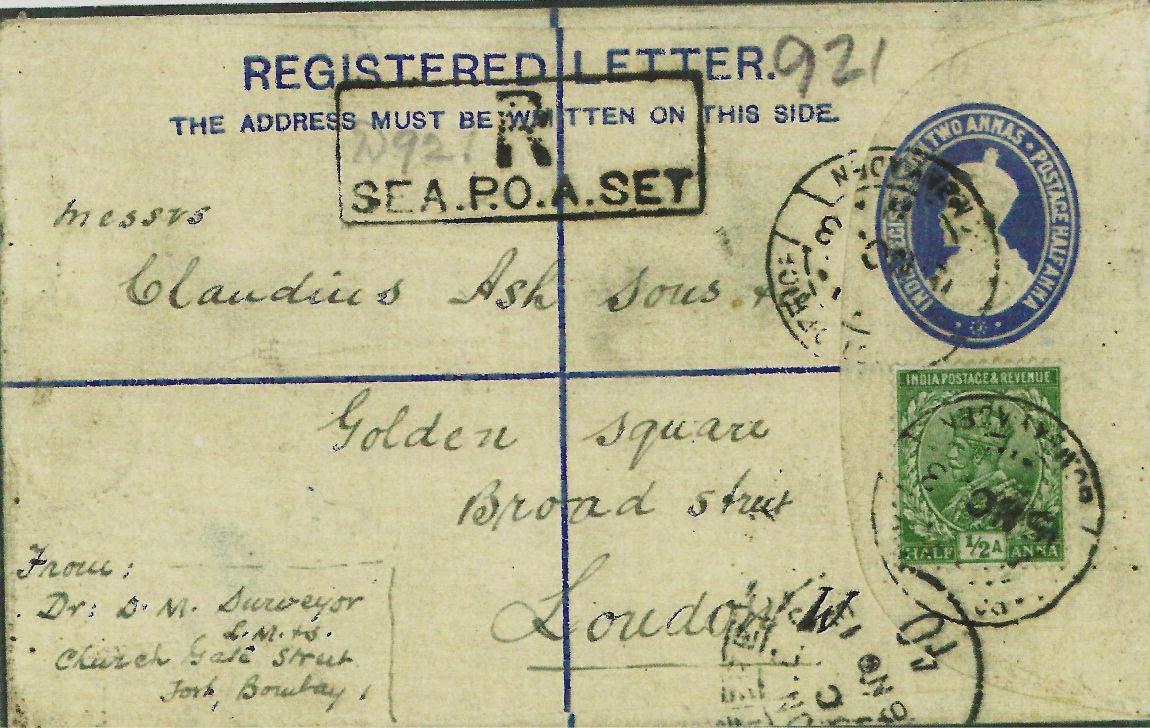
Registered letter carried on the P&O Arabia.
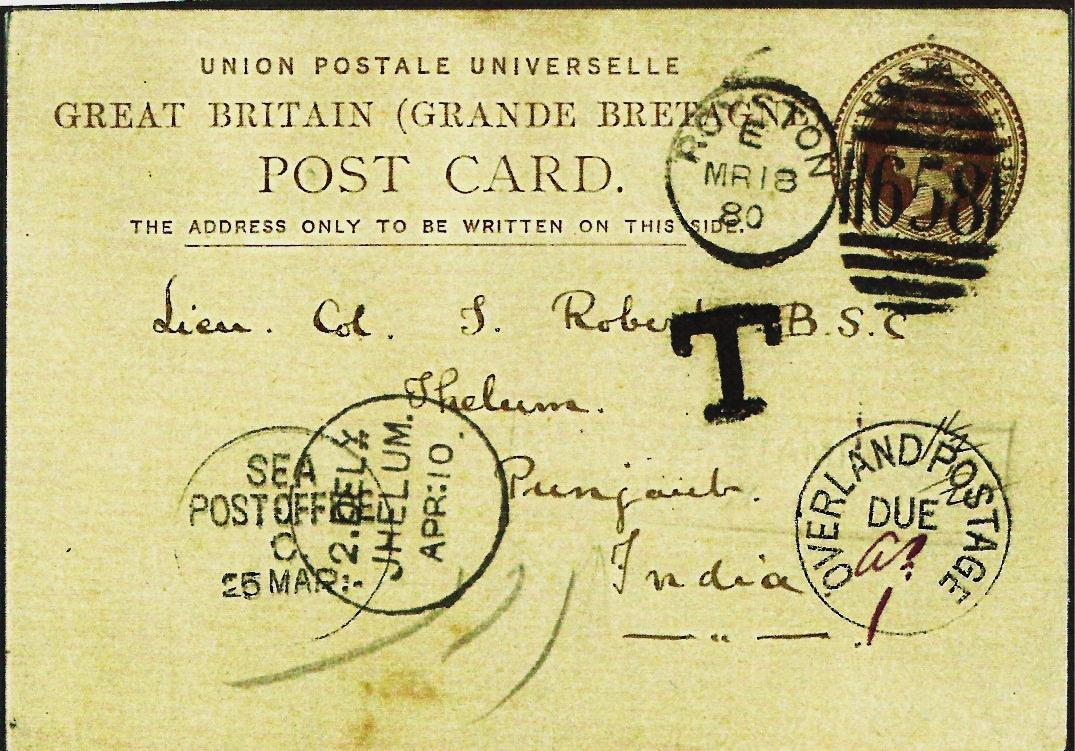
Letter carried by the P&O Siam bearing a Set C SEA POST OFFICE mark and a postage due mark.
The Sea Post Office sorting service was terminated in August 1914 with the outbreak of the 1st World War, when many of the ships were requisitioned for war service. The P. & O. Company, together with the Indian Post Office realised that they could not continue the regular weekly steamer service.
References
The Bombay - Aden Sea Post Office by Mike Dovey & Peter Bottrill, TPO & Seapost Society, 2012
Images of covers and marks courtesy Mike Dovey, Peter Bottrill and Brian Allcock

